A press snap (four-part snap, spring snap, 四合扣) is four metal (or plastic) pieces and a spring. It is not a sew-on button. It is not a jeans tack button. If the factory has no die and no anvil for the size you chose, you do not have a closure — you have a bag of parts.
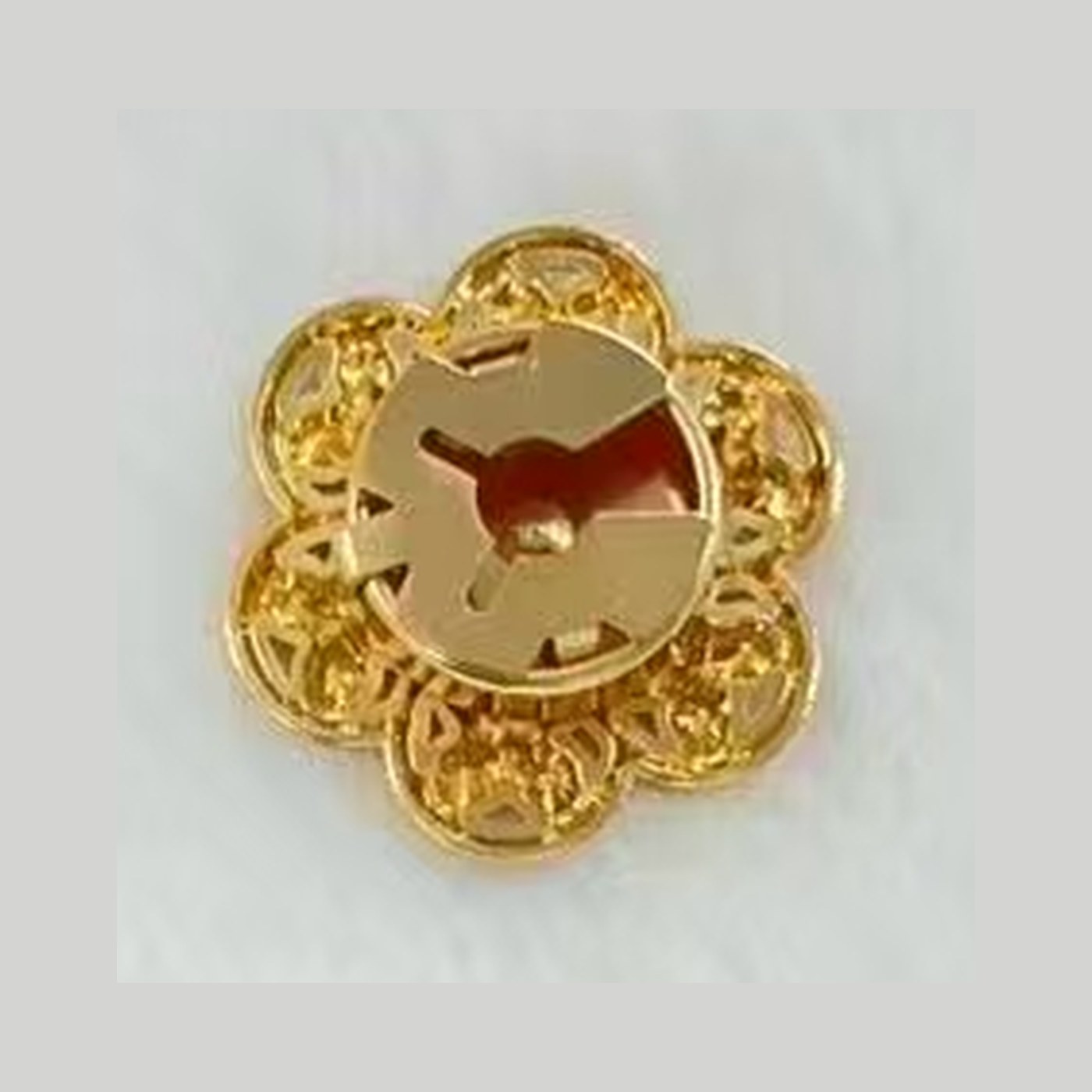
Four pieces, two sides of the cloth
Convention in Chinese mills is A–B / C–D:
- Cap (A) — the visible face: plain, fish-eye, pearl, logo, stone.
- Socket (B) — the female, with an S-spring (two parallel springs) or a ring spring for heavier cloth.
- Stud (C) — the male bump that clicks into the socket.
- Prong or post (D) — the back that clenches through the fabric.
Tin brass and manganese brass are common stampings; zinc faces appear on decorative caps; plastic and resin-face snaps are a kidswear and lightweight story. The click is the spring grabbing the stud. Open-close force is a spec, not a feeling.
S-spring (SW-type) sockets suit light and mid fabrics. Ring-spring (SK-type) sockets are the heavier-coat conversation. A sew-on two-piece snap (hand-sewn “press stud”) is a different article.
Size is the bottom three
Mills number a snap by the socket–stud–prong set, not by how large the logo cap looks. Common Chinese size families include 655, 633 and 831: smaller faces on 655, mid faces on 633, larger faces on 831. Other house codes (8 mm / 10 mm rings, 405# / 406# “big white” sew snaps, and so on) are mill-specific. The rule is stable: the cap can change; the under-set cannot be mixed across brands without a recertified punch.
Making and setting
Stamp from sheet, anneal brass where the mill’s process requires it, plate (nickel thickness is a corrosion line, not a colour), assemble the spring, then 100% click checks plus salt spray on metal programmes.
Setting is a matched die on a press (hand press or automatic). Hammer kits exist for craft; they are not a factory method. Wrong die height: prongs do not roll, fabric cuts, or the cap dished. Right set: the snap does not spin, the cloth is not cut, pull-off meets the kids or adult spec.
Knit and down stacks need a washer or a larger prong so the set does not pull through. Kids’ plastic snaps exist because metal plus a mouth is a different risk conversation — still a four-part system, still a matched die. Open-close force should be specified: too light and the coat opens; too heavy and a child cannot dress.
Do not mix mill A’s 633 socket with mill B’s 633 stud because the numbers match. Recertify the punch on the bulk fabric thickness.
TrimGem samples snaps as a system: parts + dies + fabric thickness. A pretty cap without the under-set is not a quote.