Natural-look buttons sell a story of material. Some of them are the material. Many are unsaturated polyester (UP) or urea-formaldehyde moulded and buffed to imitate horn, shell or wood. Both have a place. Pretending they are the same is how a bulk lot arrives with a different stripe.
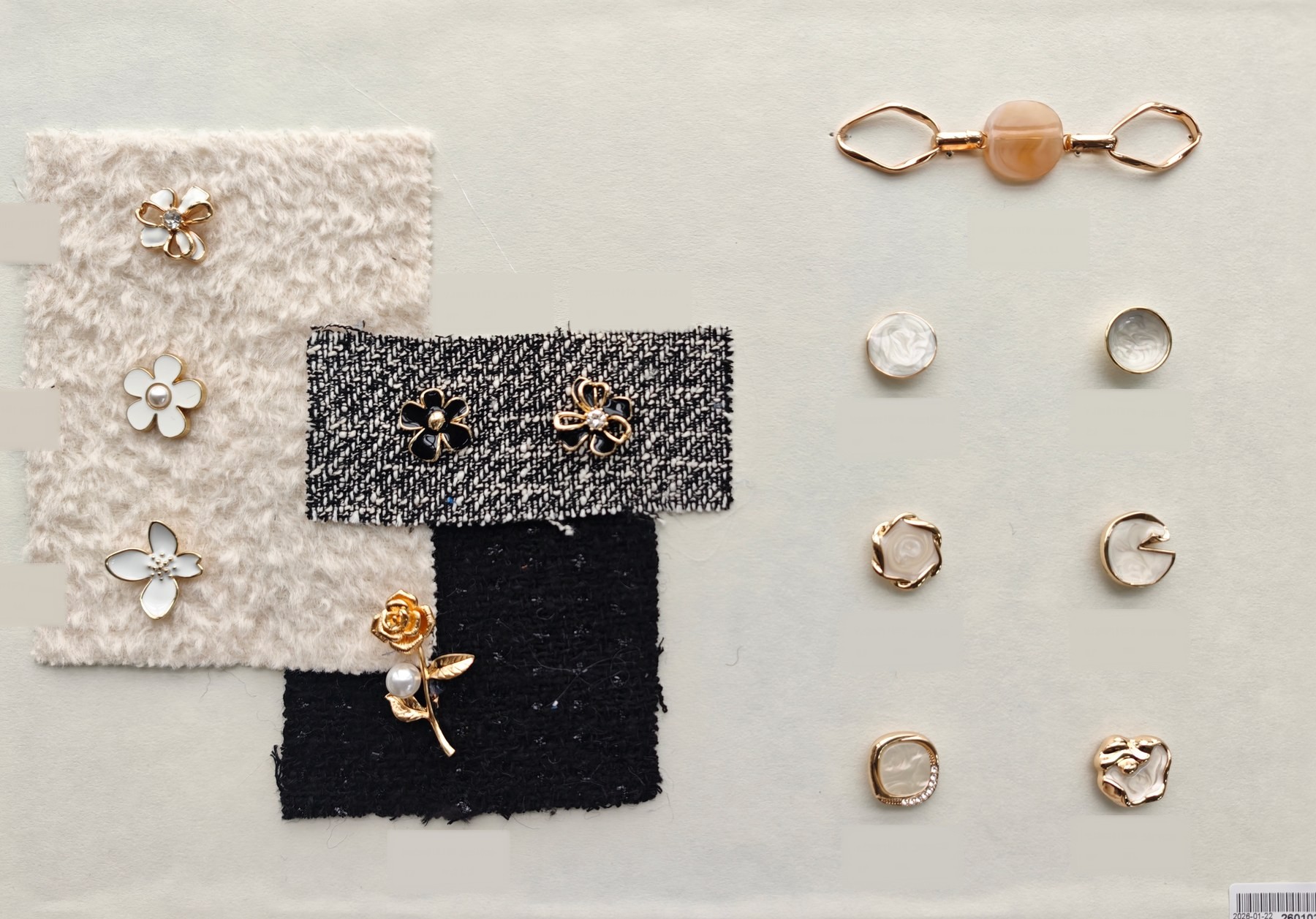
Real materials
Horn (typically buffalo) is a keratin material. It can be cut, turned and polished. Colour runs through the piece in irregular layers. No two buttons match perfectly; that is the point on a tailored coat, and a problem if a brand wants a locked lab dip. Horn is sensitive to harsh alkali and to cheap ultrasonic washing. It is also an animal by-product — some markets and some RSLs treat it as they would leather.
Shell (trochus, river mussel, mother-of-pearl) is nacre. It has a genuine iridescence you cannot fully fake with a foil. Thickness and hole strength vary with the blank. Thin fashion shells crack at the holes if the stitch tension is high.
Corozo (tagua, vegetable ivory) is the palm nut. It machines like a dense wood, takes dye, and is used for mid-to-high shirt and jacket buttons. It is not plastic; it will still move a little with humidity.
Wood (boxwood, olive, coconut shell as a related “botanical”) is light and shows grain. Finishes must be specified: oil, lacquer, or raw. Raw wood darkens and absorbs dye from a garment wash.
Coconut is technically a nut shell. It is inexpensive, dark, and common on casualwear. The face is not as fine as horn.
Imitations that factories actually run
Poured polyester resin can sandwich colours to mimic horn stripes. Urea can be mottled for a matte workwear look. Acrylic and ABS take pearl foils for a shell effect. These are consistent, drill cleanly, and survive industrial laundry better than most organics.
They will not have the cool touch of shell or the smell of horn when you buff them. A designer who wants “real horn” should say real horn on the BOM, accept shade banding, and budget for a higher reject rate.
Spec that survives sampling
Write: material (real horn / corozo / polyester horn-look), diameter, ligne if the house uses it, sew-through or shank, hole count, finish (matte, polished, waxed), and whether the lot may be shade-sorted into garments. For real horn and shell, ask for a range standard, not a single button as the only gold sample.
If the program is kidswear, drop-off strength and small-parts geometry still apply. A beautiful 12 mm shell is still a small part if it comes off.