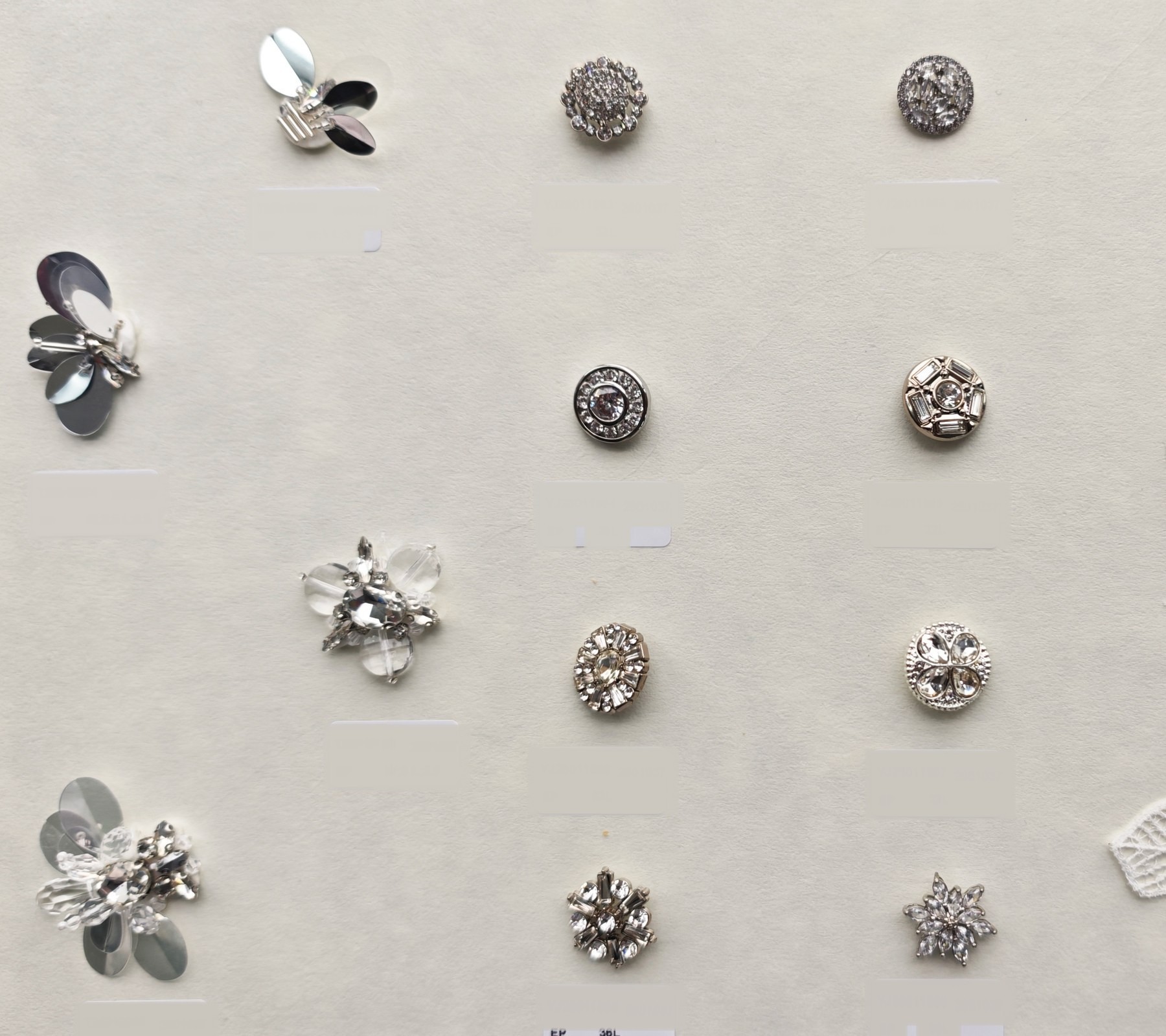
In a button factory, “plastic” and “resin” are not synonyms. Resin buttons in the trade usually mean thermoset unsaturated polyester (UP) poured or centrifugally cast, then blanked, turned and polished. Urea-formaldehyde (UF) and melamine-formaldehyde (MF) are older thermosets for shirts. Injection-moulded thermoplastics — ABS, PA (nylon), POM, PET, PC, PMMA — are a different process: pellets, a tool, a cycle time.
Thermoset resin (the “classic” fashion button)
Unsaturated polyester is mixed with catalyst, pigment and sometimes effect pastes, then cast as a rod or a sheet. Blanks are cut, faces are turned, holes are drilled, and the button is tumbled and polished. That route gives depth of colour, horn-look laminates and a weight that designers like on coats.
Urea (often sold as a matte shirt button) is inexpensive, takes a soft sheen, and is still widely used on uniforms and shirts. Melamine is harder and more heat-resistant — the old “won’t melt under a too-hot iron” shirt button.
These materials are not easily plated. If you need a chrome look, you are usually in ABS or zinc, not UP.
Thermoplastics (injection)
| Code | Material | Why it is used |
|---|---|---|
| ABS | acrylonitrile butadiene styrene | easy electroplating; fashion faces |
| PA (nylon) | polyamide | toughness, wash resistance, snap components |
| POM | polyoxymethylene | hard, glossy, wear-resistant shanks and tailored buttons |
| PET | polyester | shirt buttons that survive high-temperature laundry |
| PMMA / PC | acrylic / polycarbonate | transparent and “crystal” looks |
| TPU | thermoplastic polyurethane | soft, elastomeric novelty parts |
PVC and some PU skins still appear on novelty buttons. They are the first things a restricted-substance list will question (phthalates, organotins). Prefer PET, PA or UP unless the design truly needs a soft face.
Process implications
Injection needs a steel tool. That is an NRE (non-recurring engineering) cost, amortised over the order. Cast polyester uses cheaper moulding for colour and can change a marble effect without a new cavity — but diameters and hole positions still need a stable process.
Heat is not theoretical. A PET or MF shirt button can sit under a press that would mark a cheap PP button. A plated ABS button can lose nickel in a salt-spray or in a harsh wash if the plate is thin.
When you RFQ, send the polymer family, not “plastic, gold, 20 mm.” A factory quoting UP against an ABS plated sample is quoting a different article.