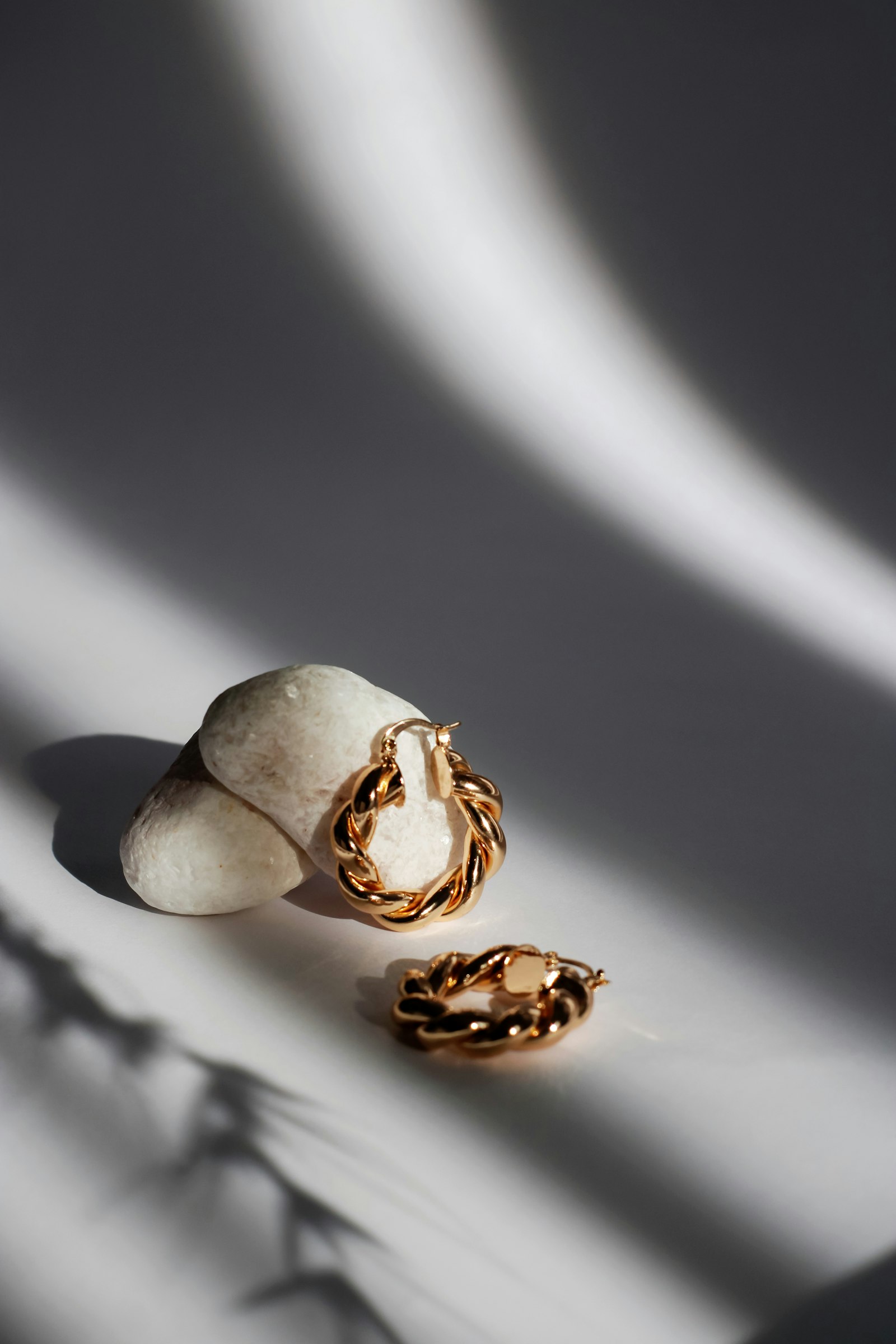
A button is a fastener and a small piece of hardware. The part that actually holds it to the garment is either thread through holes (sew-through) or a shank on the reverse. Mixing those up on a tech pack is how a 4-hole shirt button ends up specified for a heavy boiled-wool coat.
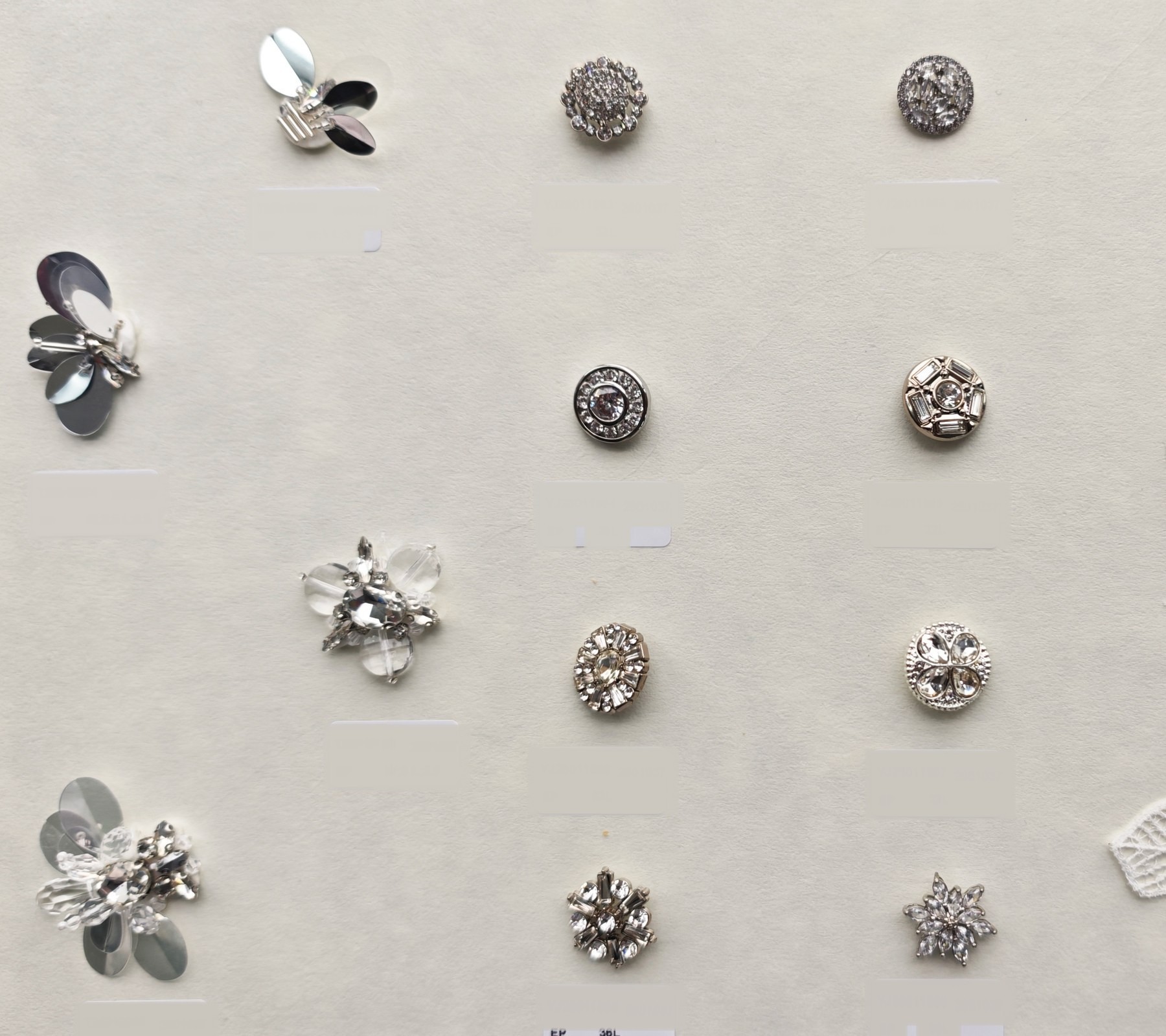
Sew-through: two-hole and four-hole
A sew-through button is drilled or moulded with holes. Two-hole buttons are the shirt default — small (often 10–15 mm), sewn with a short thread shank so the button can tilt into the buttonhole. Four-hole buttons take a more stable stitch pattern (parallel, cross or arrow) and are common on tailoring, shirts at 18 ligne and up, and outerwear when a flat face is wanted.
On a machine, the operator (or the programmer) sets stitch count and whether a thread shank is wound under the button. That thread column is not decoration. Without it, a thick cloth jams the button against the hole and the facing wears.
Shank buttons
A shank button has a closed loop or tunnel on the back. The face can be fully modelled — crest, faux horn, crystal, enamel — because there are no holes through the design.
- Self-shank (integral shank): moulded in one with a polyester or urea button. Common, economical, limited loop size.
- Tunnel shank: a channel through the reverse; sits close to the cloth; good on finer fabrics.
- Metal loop shank: a brass or steel wire set into ABS, acrylic or zinc. Gives more stand-off, which is what a coat needs so the buttonhole can close without crushing the cloth.
Mills that sew buttons by machine will ask for five shank dimensions: inner height from the button back to the inside of the loop, inner loop length, overall loop height, outer loop length and loop width. Those letters (often A–E on a factory drawing) are how the clamp is set. A pretty CAD with no shank drawing is not sewable at speed.
Size, not “look”
A practical split, used across shirt and coat factories:
- 10–15 mm: shirts, light knit cardigans.
- 18–30 mm: jackets, coats, statement fronts.
Ligne is still the trade unit in many button houses (1 ligne ≈ 0.635 mm). If your designer works in millimetres, put both on the BOM. Horn-look urea at 24 mm with a short self-shank will fail on a double-cloth coating; the same diameter with a tall metal loop will not.
Sew-ons are not jeans buttons (those are riveted) and not snaps (those are a four-part press fastener). If the garment is a kids’ style, attachment strength is a safety spec, not a visual one — see our later notes on small parts.