Decorative edges — pearl tape, bead fringe, chainette, knotted fringe, tassels — sit at the end of a garment where everything snags. They are sold on glamour. They are costed on how the yarn or bead is locked into a heading tape.
Headings come first
A usable trim has a heading you can sew: a braid, a satin tape, a Raschel band, or a corded edge. If the only thing on the swatch is a string of pearls, the factory will invent a stitch — usually the wrong one. Specify heading width, fibre and whether the heading is meant to be seen.
Beads and pearls
Fashion “pearls” on tape are usually ABS or acrylic with a coating, sometimes glass. Real nacre is rare on metre trims because hole strength and shade lots will not hold a 200-metre dye story. Glass is heavy and can shatter; it also fails needle detection policies in some plants. ABS pearls need a coating adhesion conversation if the garment is dark and the wash is hot — a peeling pearl is a customer return, not a “vintage look.”
Fringe families
- Chainette is a knitted tube (often viscose or polyester) that reads as a silky tassel when cut. It sheds if the cut is not sealed or if the knit is too open.
- Knotted fringe locks groups of yarns so the drop does not empty in the first wear.
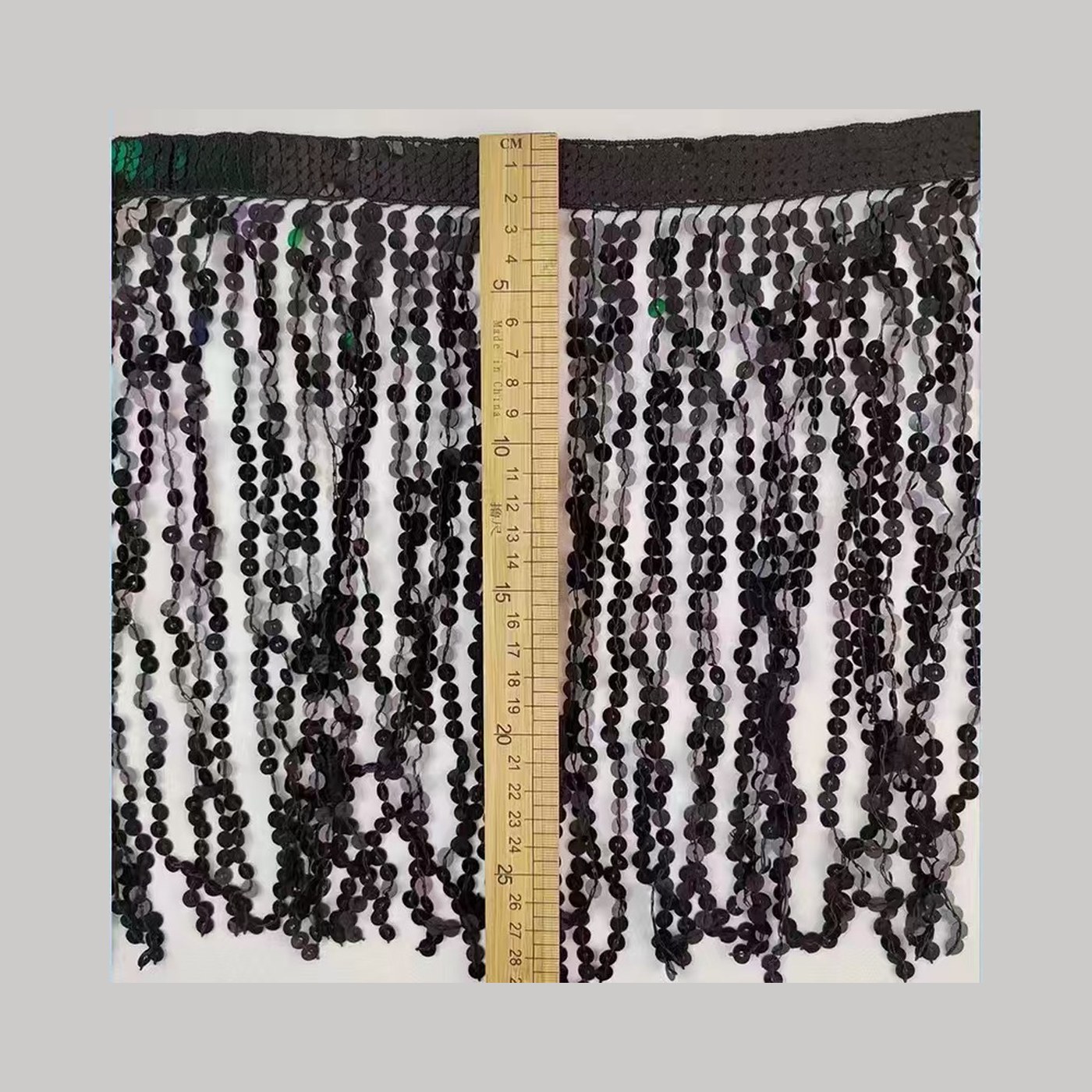
- Beaded fringe hangs beads from a braid; the thread that carries the bead is the weak point.
- Feather and eyelash on lace are a Raschel or embroidery edge, not a separate fringe SKU — but they snag the same way.
Tassels are a cord plus a cut skirt plus a binding. Spec skirt length, cord diameter, and whether the head is wrapped, moulded or metal-capped.
Sewing and testing
Stay-stitch headings on knits. Do not catch bead holes in an overlock. Wash a metre against the shell: crocking from metallic paint, shrinkage of viscose chainette, and bead loss are the three classic failures.
Kidswear: beads are small parts. If a pearl can come off in a 90 N pull, it does not belong on a size 3T dress, however well it photographs.