
An appliqué is only as honest as the thread that builds it. Designers pick a motif. Mills pick a ticket (tex or denier × ply), a fibre and a twist. Those three decide sheen, wet strength and whether a 60 °C wash dulls the flower.
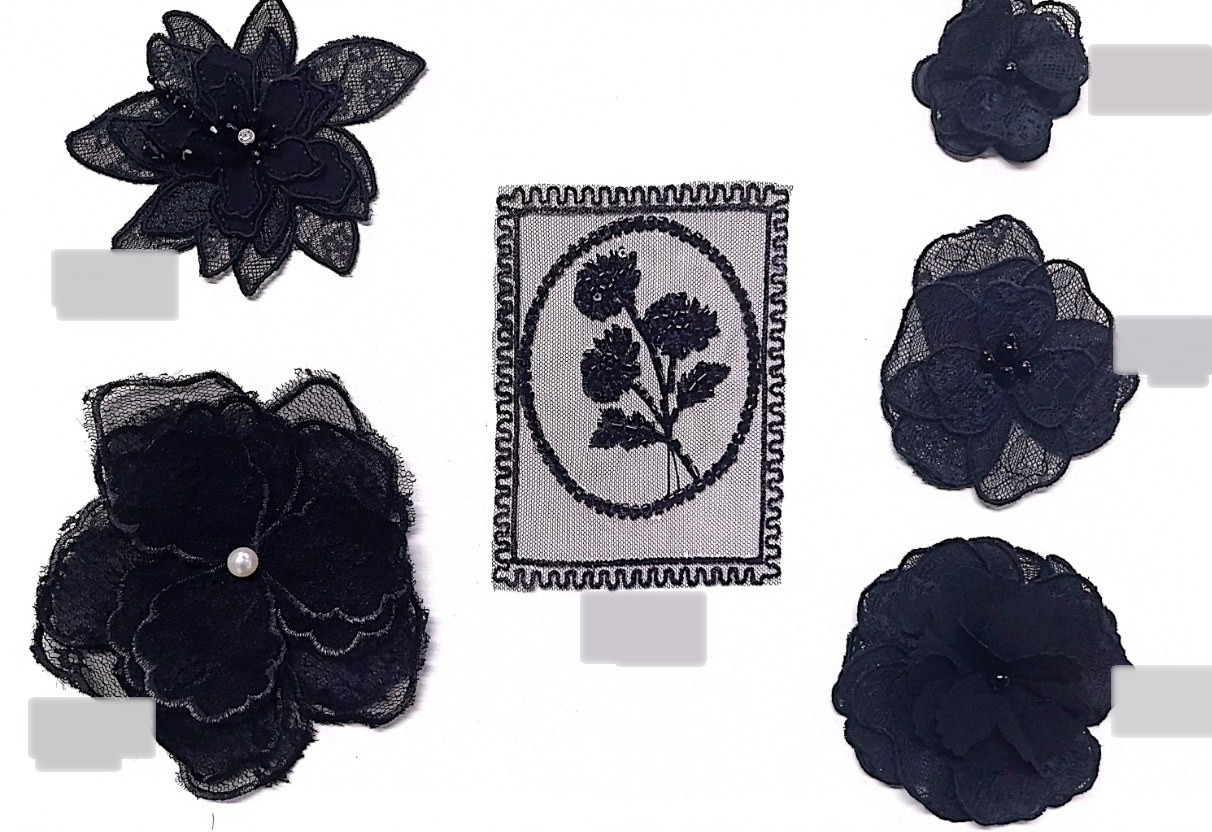
Viscose rayon (the “silk look”)
Viscose filament is still the embroidery yarn people mean when they say a motif looks expensive. It is bright, soft and dyes to a wide gamut. Wet strength is the tax: viscose can drop to around 60% of dry strength when wet, and it dislikes hard abrasion and alkaline laundry. Bridal and evening appliqués that will be dry-cleaned or gently washed are the home of viscose. Kids’ playwear is not.
Typical machine tickets sit in the 120D/2 to 300D/2 band, with a higher twist than a cheap sewing thread so the filament does not sliver on the needle.
Polyester embroidery thread
Polyester is the production default: high tenacity (a much higher cN/dtex than viscose), better wash and chlorine resistance, huge shade ranges. The sheen is a little harder. Tension on the machine must be set; polyester’s stretch will pucker a light ground if the operator copies a viscose program.
If the garment is industrial-laundry or kids’ wash, start with polyester and only swap viscose on a controlled panel.
Mercerised cotton and silk
Mercerised cotton (gassed, mercerised, dyed) is the fine, wash-stable yarn for traditional embroidery and some Schiffli on cotton grounds. Shrinkage is lower than raw silk. Silk remains the couture and heritage embroidery yarn: unmatched hand, poor heat and wash story, stored like a protein fibre.
Metallics
Metallic embroidery yarn is a laminated film wrapped on a core (often polyester or viscose). It flashes. It also breaks on dense satin stitches and can melt if the needle runs hot. Use it for linear and open work, not for a filled 3D petal unless the mill has already proven the ticket.
Rayon and polyester can substitute for each other in a design, with a tension change. Cotton and metallic cannot. Put the fibre on the appliqué spec the same way you put it on a lace: content, ticket, and a wash test against the shell.