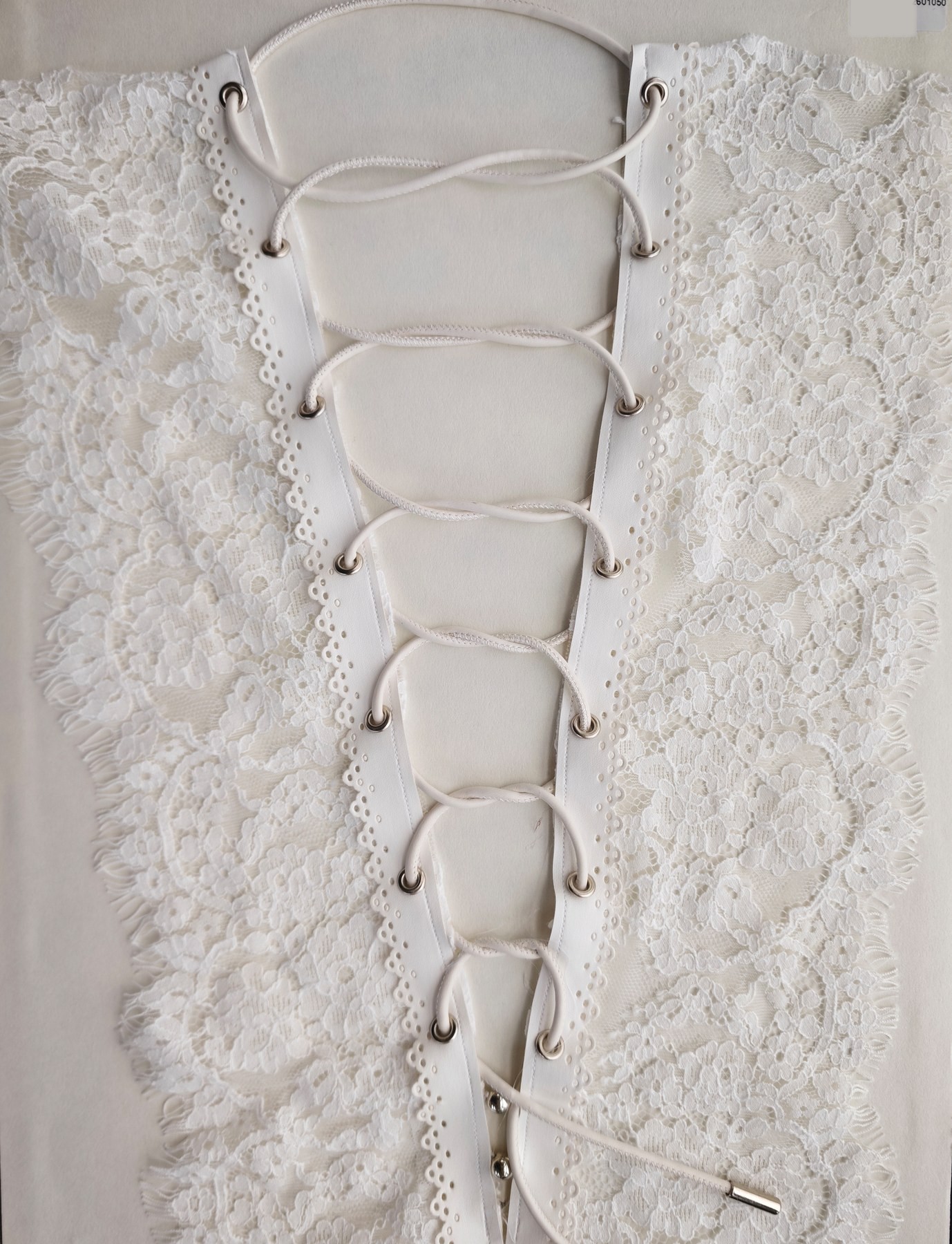
An eyelet is a flanged metal ring set in a punched hole to stop the cloth from tearing. A grommet is the same idea at a larger scale, usually with a separate washer so the reverse is as tidy as the face. A rivet (including a jeans rivet) is a solid or semi-tubular fastener; it does not leave a hole for a cord.
Apparel versus industrial language
In garments and shoes, people say eyelet (or the older factory word “chicken-eye” in some Chinese mills) for the small rings on a hood cord or a placket. Industrial catalogues use grommet for tarpaulin-size rings. The engineering distinction used by equipment makers is that a grommet’s flange is relatively small compared with its hole, and it is almost always set with a washer.
If you send a 10 mm inner-diameter “eyelet” without a washer into a single jersey, the reverse will look chewed. If you send a two-part grommet into a corset panel, you may crush a lace ground. Match the set to the fabric stack.
Size numbers you will see on Chinese quotes
Many mill lists still use a traditional number (#80, #200, #600…) that tracks inner diameter. A practical extract:
| Mill no. | Approx. inner Ø |
|---|---|
| #80–#150 | 3–4 mm |
| #200–#300 | 4.5–5 mm |
| #400–#600 | 6–8 mm |
| #800–#1000 | 10–12 mm |
| #2000 and up | 20 mm and above |
Always confirm millimetres. The number system is not ISO. Height (barrel length) must match total fabric thickness after seam allowance, not the face fabric alone.
Shapes go beyond round: oval, hexagonal, “flower” (petal) eyelets, mesh-top eyelets. Those are fashion. The set tool still has to match the barrel.
Setting
Factory setting is a press with the correct die. Hand punches exist for sampling. Stretch knits grow after punching; cut a smaller hole or use a stay tape. On kidswear, an eyelet is a small part if it comes off — attachment strength belongs on the spec with the diameter.
Finish is the same conversation as any hardware: steel or brass substrate, plate, antique, NSS hours, nickel release if it sits on skin.